As an athlete, you can derive significant health and performance benefits from receiving regular sports massage therapy. Sports massage therapy is a form of massage therapy that helps athletes recover from or avoid sports-related injuries, and typically utilizes more vigorous forms of massage to facilitate muscle healing or relaxation. Sports massage therapy should be performed before and after a competition to prevent injuries and loss of mobility and maximize the life of your sporting career.
Physical Benefits
According to SportsInjuryClinic.net, the physical benefits of sports massage therapy include the following: improved blood flow and nutrient delivery to your muscles, efficient clearing of harmful metabolic byproducts, tension reduction in your fascia, reduction of your scar tissue, improved tissue elasticity and improvements in your tissue's ability to absorb nutrients, also known as micro-circulation.
The physical benefits of sports massage therapy are important for all athletes, especially those engaged in sports where physical contact and bruising are likely, such as football, rugby or ice hockey. Endurance athletes also are excellent candidates for sports massage therapy, as the long training hours and the nature of competitive endurance activities, such as running, cycling and cross-country skiing, place considerable strain on your musculoskeletal system. Sports massage therapy helps relieve stress on your joints, ligaments, tendons and muscles.
Home Ultrasound Unit Relieve Pain, Speed Healing At Home 100% Guaranteed & Dr Recommended UltrasoundCure.com
Sponsored Links
Physiological Benefits
The principle physiological benefits of sports massage therapy include pain reduction and relaxation; two important benefits that can keep you healthy and competitive over time. Sports-related pain can result from a muscle strain, a contusion or bruise or excessive use of a muscle. Overuse of a muscle or muscle group may result in delayed onset muscle soreness (DOMS), a phenomenon that's long been associated with increased physical exertion, according to Len Kravitz, Ph.D., an exercise scientist at the University of New Mexico.
A 2005 study published in the "Journal of Athletic Training," concludes that massage therapy is effective at alleviating DOMS by approximately 30 percent and reducing swelling, but it has no effects on muscle function. Muscle relaxation is another important physiological benefit of sports massage therapy. Muscles relax when they're exposed to heat, receive increased blood circulation and are stretched appropriately; all common results of an effective sports massage therapy session. A reflex relaxation also is caused when your mechanoreceptors--tiny sensory receptors that respond to pressure or changes in tissue length--are stimulated during massage.
Psychological Benefits
The psychological benefits of sports massage include a reduction in your approach anxiety, enhanced feelings of invigoration and rejuvenation and an increased awareness of your mind-body connection, according to SportsMassageTherapy.info. Approach anxiety, which is the anxiety you feel about an upcoming match or event, is a common part of sports participation.
A massage therapist skilled in the art of sports massage will know what techniques to use to help counter your anxiety. The simple act of having your body worked on can give you a psychological edge that reduces your anxiety. After you've received a sports massage, it's likely that you'll feel a little sore, but you'll also feel invigorated and refreshed, ready to compete again at your highest level. The restorative effects of massage therapy and the corresponding psychological benefits are crucial for your continued athletic success. So too is an awareness of your mind-body connection, which massage therapy supports. Massage therapy can provide you with an awareness of your body that few other therapeutic modalities can match.
Read more: http://www.livestrong.com/article/115532-benefits-sports-massage-therapy/#ixzz1ABsBexFh
Showing posts with label sports. Show all posts
Showing posts with label sports. Show all posts
Wednesday, January 5, 2011


Thursday, June 3, 2010
What Kind of Massage do you Need Right Now?
Choosing from a menu of massage techniques may sound like a heavenly dilemma (so many techniques, so little time …). But the choice you make is a weighty one — and it’s not just about your preferences for light or deep pressure, but also your health and physical condition right now.
So how do you know which massage therapy technique is best for your health concerns and priorities? Here’s how to know your options so you can get the greatest therapeutic benefit from your massage.
Swedish massage
Best for: Relaxation, stress relief, first massage
The most common form of massage therapy in the U.S., Swedish massage is designed to warm up the muscle tissue to release toxins, tension and soreness. The strokes are longer and slower than with many other forms of massage. It’s usually done using the hands, sometimes with the forearms. Swedish massage can be done using lighter or deeper pressure, but the strokes are long — from the shoulders to the low back and back up, for example, or from wrist all the way up the arm into the neck and then back down again.
This form of massage is typically very relaxing and is an ideal technique to experience if you’ve never had a massage before.
Deep tissue massage
Best for: Chronically tight or painful muscles, repetitive strain, postural problems, recovery from injury
Deep tissue massage is a combination of various techniques used to increase the level of pressure applied to the body. It’s often done more with the forearm or elbow to help exert more pressure into the tissue. Two of the most common specific forms of deep tissue massage:
· Petrissage is a massage movement that is much like kneading bread; the therapist uses this technique to get the blood flow into a traumatized area of the body. It’s typically applied in a specific area of the body rather than used as a full-body treatment.
· Friction is another technique that produces heat and helps bring more concentrated blood flow to an area.
· Tapotement (tah-pōt-ment´) is often described as karate chopping but can be done in other ways as well, such as using the fingertips or with the hands cupped. The main characteristic of tapotement is a rapid, rhythmic tapping motion, usually with a higher intensity of pressure applied to the tissues than with many other forms of massage.
Most deep tissue techniques are done at a slower pace, with lots of communication between the therapist and the client. The therapist should check in with you during the treatment by asking, “With this pressure would you like me stay here or go deeper or lighter?”
There might be a certain level of discomfort — what we call ‘in a good pain range’ — for deep tissue massage to be effective. But it should not feel too uncomfortable. It’s similar to stretching — it may not feel very good to start, but if you breathe and hold the stretch, it starts to feel better.
Trigger point work
Best for: Highly localized “knots” where the body holds tension;
Trigger point work is designed to get into those little knots. It’s often done using the thumb, knuckle or elbow to apply static pressure to those points. The therapist can feel that knot to detect when it’s loosening up and is trained to know what a muscle is supposed to feel like normally versus what it feels like when it’s “in knots.”
Common trigger points — like that nagging area between the shoulder blades — are associated with the fact that toxins commonly accumulate in certain places in the body. When the therapist locates a trigger point and applies pressure, that pain will often “refer” or travel to another part of the body. For example, if the therapist applies pressure to your hamstring or back of your leg, you might feel it in your lower back.
Trigger point work will help get an injured client’s muscle tissue back to a more normal state, but the initial massage may be about getting everything around that injured area more relaxed. Sometimes a client’s tissue can’t take the deeper pressure work, or the client doesn’t like the feeling of the deep tissue work – it may be uncomfortable for some clients.
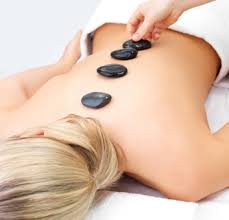
Hot Stone Massage
Best for: easing muscle tension without deep pressure; maximizing massage time
A hot stone massage might look and feel too good to be therapeutic, but these stones do in fact serve a clinical purpose.
The shape of the stones themselves enable the therapist to use special techniques that can deliver more therapeutic benefit — benefits you’ll really feel.
A therapist might use the rounded edge of a stone around the shoulder blade or in the low back or neck area to really relax the tissue between the muscles and the bone.
Then there’s the heat, of course. Beyond the “ahhh” factor of feeling those hot stones go to work on your aching back or neck, the stones transfer heat into your body. Thus allowing the therapist to work more effectively.
Still, you want the longest session you can get with a hot stone massage. The stones are pre-heated to 125 degrees at the time your session begins. You want an 80- or 110-minute hot stone massage to get the greatest benefit.
Prenatal Massage
Best for: Decreasing swelling, relieving aches and pains, easing the physical and emotional stresses of pregnancy
If you’re pregnant, it’s very important to work with a therapist who’s trained in prenatal massage. Prenatal massage training includes instruction in specific modifications used to help protect the baby, relieve symptoms like edema (swelling) and low back pain that are common during pregnancy, and make Mom more comfortable both during and after the massage.
Prenatal massage is typically done with the client lying on her side, or on her back with a wedge to support the back and knees to take pressure of the baby off the mom’s internal organs.
The therapist also needs to be trained on certain aspects of prenatal massage such as pressure points that may have the possibility of triggering contractions. Research doesn’t necessarily prove that, but you want to make sure the therapist is knowledgeable in this area.
Sports massage
Best for: Preventing and treating injury and enhancing athletic performance.
Sports massage is designed mostly for pre– or post–sports event work. For example, you might get a sports massage the day of or the day before an event such as a half-marathon to get the body really ready for the activity.
Sports massage is typically not as relaxing as other forms of massage — the generally more fast-action than Swedish massage; the techniques the therapist uses to apply pressure to the body move at a faster pace. Aided stretching is also a common sport massage technique; and it’s used to help get the lactic acid buildup in the muscles to dissipate.
But you don't have to be a professional athlete to get a sport massage. It's ideal for anyone who’s physically active — as well as someone who’s just starting out with a new workout program, running their first 10K or marathon, or doing anything else that’s outside their normal activity routine. Especially if you’re more of a novice athlete, a pre-event sports massage can make that a better event for you. And for regular marathon runners, there are specific techniques used to help a body that’s been through that kind of intense event.
Right technique, right therapist
The majority of massage therapists are trained in Swedish and deep tissue massage. Some have had advanced training in other techniques, and everyone has techniques in which they’re especially skilled or experienced. So a high-quality therapeutic massage provider will look at your health history, goals, challenges and lifestyle to match you with the therapist who’s best for your situation. You don’t want to just get put in a time slot – you need to be matched to the right therapist for you.
Your preference for light or deep pressure is another reason you want to be matched to a therapist vs. just a time-slot technique. Massage therapists’ level of pressure is not determined by the therapist’s stature, size or strength, but by how they leverage their body weight to do the deep bodywork.
Many people believe a male therapist is stronger than a female therapist and assume they’ll get a deeper massage, but that’s really not true. There are a lot of petite female therapists who know how to leverage their body weight and provide a deep tissue massage experience. So remember, gender doesn’t determine the type and depth of massage you will get.
At Elements Therapeutic Massage, our therapeutic approach is designed to match you with the therapist and the specific technique that’s best for your unique health and wellness situation. We specialize in customizing each massage session to the specific needs of every client. Therefore we often incorporate techniques from each type of massage to ensure that you receive the best and most appropriate treatment.
We also use a proprietary numbering system that indicates the level of work a therapist does. Level 1 is light pressure and Level 4 is deep pressure. Some conditions such as cancer, epilepsy, or diabetes are not appropriate for some massage techniques. Please consult your physician before beginning any massage therapy program.
Subscribe to:
Posts (Atom)