We found an article from February '11 on that discusses the benefits of receiving a regular massage to help alleviate pain due to sciatic nerve problems...enjoy!
Can Massage Therapy Deliver Lasting Relief from Sciatica?
February 13, 2011 | Author: Leroy Lombard | Posted in Massage
Massages sure feel amazing, don’t they? After a massage session, you feel so relaxed and light. But just how effective is massage as a way to treat sciatica?
Massages can in fact be quite helpful if you suffer from back pain or sciatica. If you can manage to find a massage therapist with knowledge of muscle imbalances, you’ll do much better.
There are quite a few upsides to massage for sciatica. You’ll notice that a lot of massage therapists these days employ a variety of different techniques and styles. Anything from traditional massage to energy work or even correcting muscle imbalances. Many studies have even shown that massage can improve flexibility, decrease back pain, encourage sound sleep, and decrease feelings of depression.
When you’re looking for a therapist to give you a good massage for sciatica, try to find one that has an understanding of muscle imbalances. These types of massage therapists are unbelievably rare, but if you can find one, you’ll be quite happy. Since most causes of sciatica actually come from muscle imbalances, finding someone who knows a lot about it can help tremendously.
What are the benefits of massage therapy for sciatica? Massage can increase blood circulation and help reduce any sort of inflammation. Massage helps to move lymph through your system, which can actually impede circulation and and promote inflammation if it isn’t managed. Not only that, but you’ll be more flexible, be more relaxed, have a better night’s rest, and you have an overall sense of well-being.
Massage can help relax tense muscles that may be putting pressure on your sciatic nerve, as may be the case with conditions such as Piriformis Syndrome. But can it help be an effective treatment in all cases of sciatica?
Well, although you might feel good after a massage, you should not rely solely on massage to treat sciatica. Simply put, massage does not deal with many of the important underlying factors that are responsible for back pain and sciatica such as muscle imbalances, poor posture, or other personal habits we might have about how we hold our body throughout the day.
You will probably see some amazing results if you combine it with other types of treatment out there. But alone, it just doesn’t cut it. Perhaps it would be more effective to use massage together with other forms of treatment like stretching exercises that can restore equilibrium to how you hold your body.
So, go and get a massage. I’m sure it will help you feel better and relax you. But be sure to not stop there. Keep working and untangling the root cause and you’ll find lasting relief.
If you found these tips helpful and you’d like to discover the best sciatic nerve pain exercises and the ones you definitely want to avoid, check out my Bulletproof Back review. This program, combined with massage therapy is quite helpful for relieving sciatica and back pain.
Showing posts with label deep tissue. Show all posts
Showing posts with label deep tissue. Show all posts
Saturday, May 21, 2011


Wednesday, January 5, 2011
..Once again, LIVESTRONG.com has the right idea! here is their take on the Benefits of a Sport Massage.
As an athlete, you can derive significant health and performance benefits from receiving regular sports massage therapy. Sports massage therapy is a form of massage therapy that helps athletes recover from or avoid sports-related injuries, and typically utilizes more vigorous forms of massage to facilitate muscle healing or relaxation. Sports massage therapy should be performed before and after a competition to prevent injuries and loss of mobility and maximize the life of your sporting career.
Physical Benefits
According to SportsInjuryClinic.net, the physical benefits of sports massage therapy include the following: improved blood flow and nutrient delivery to your muscles, efficient clearing of harmful metabolic byproducts, tension reduction in your fascia, reduction of your scar tissue, improved tissue elasticity and improvements in your tissue's ability to absorb nutrients, also known as micro-circulation.
The physical benefits of sports massage therapy are important for all athletes, especially those engaged in sports where physical contact and bruising are likely, such as football, rugby or ice hockey. Endurance athletes also are excellent candidates for sports massage therapy, as the long training hours and the nature of competitive endurance activities, such as running, cycling and cross-country skiing, place considerable strain on your musculoskeletal system. Sports massage therapy helps relieve stress on your joints, ligaments, tendons and muscles.
Home Ultrasound Unit Relieve Pain, Speed Healing At Home 100% Guaranteed & Dr Recommended UltrasoundCure.com
Sponsored Links
Physiological Benefits
The principle physiological benefits of sports massage therapy include pain reduction and relaxation; two important benefits that can keep you healthy and competitive over time. Sports-related pain can result from a muscle strain, a contusion or bruise or excessive use of a muscle. Overuse of a muscle or muscle group may result in delayed onset muscle soreness (DOMS), a phenomenon that's long been associated with increased physical exertion, according to Len Kravitz, Ph.D., an exercise scientist at the University of New Mexico.
A 2005 study published in the "Journal of Athletic Training," concludes that massage therapy is effective at alleviating DOMS by approximately 30 percent and reducing swelling, but it has no effects on muscle function. Muscle relaxation is another important physiological benefit of sports massage therapy. Muscles relax when they're exposed to heat, receive increased blood circulation and are stretched appropriately; all common results of an effective sports massage therapy session. A reflex relaxation also is caused when your mechanoreceptors--tiny sensory receptors that respond to pressure or changes in tissue length--are stimulated during massage.
Psychological Benefits
The psychological benefits of sports massage include a reduction in your approach anxiety, enhanced feelings of invigoration and rejuvenation and an increased awareness of your mind-body connection, according to SportsMassageTherapy.info. Approach anxiety, which is the anxiety you feel about an upcoming match or event, is a common part of sports participation.
A massage therapist skilled in the art of sports massage will know what techniques to use to help counter your anxiety. The simple act of having your body worked on can give you a psychological edge that reduces your anxiety. After you've received a sports massage, it's likely that you'll feel a little sore, but you'll also feel invigorated and refreshed, ready to compete again at your highest level. The restorative effects of massage therapy and the corresponding psychological benefits are crucial for your continued athletic success. So too is an awareness of your mind-body connection, which massage therapy supports. Massage therapy can provide you with an awareness of your body that few other therapeutic modalities can match.
Read more: http://www.livestrong.com/article/115532-benefits-sports-massage-therapy/#ixzz1ABsBexFh
Saturday, November 6, 2010
A Simple Massage Could Keep you From Getting Sick
Here is a great article I came across while doing my daily internet browsing. It seems like everyone is sick at the moment so I was happy to read about the positive effects massage can have on the immune system!
(NaturalNews) Massages are a great way to release tension and stress and promote relaxation. But a new study published in the Journal of Alternative and Complementary Medicine has revealed for the first time that massages also provide a measurable, therapeutic benefit to the immune system as well.
Dr. Mark Rapaport and his team of researchers from Cedars-Sinai Medical Center in Los Angeles, Calif., evaluated 53 people, 29 of which received 45-minute Swedish massages--one of the most common forms of massage used in the U.S.--and 24 who received gentler, light touch massages. Researchers took blood samples at intervals before and after the massages and found that those who received even just one Swedish massage experienced significant, positive changes in blood composition.
"This research indicates that massage doesn't only feel good, it also may be good for you," explained Dr. Rapaport in a press release. "People often seek out massage as part of a healthy lifestyle but there hasn't been much physiological proof of the body's heightened immune response following massage until now."
Besides experiencing a significant increase in lymphocytes, the white cells in the body that help fight and prevent disease, the Swedish massage group experienced lower cortisol levels as well. Cortisol is the hormone released by the adrenal gland in response to stress.
The Swedish massage group also experienced a decrease in arginine vasopressin, a hormone linked with aggressive behavior.
"European-style massage is often used to treat back pain, sleep disorders, and other stress-related disorders," explain Bradley J. Willcox, D. Craig Willcox and Makoto Suzuki in their book The Okinawa Program: How the World's Longest-Lived People Achieve Everlasting Health.
Sunday, October 17, 2010
Chocolate-Pumpkin Tart Recipe
It's my favorite time of year! With pumpkins, fall colors, crisp weather and all the wonders that the season has to offer I thought I would share a delicious pumpkin treat. This was found on marthastewart.com

Ingredients
Serves 10
* 20 chocolate wafer cookies
* 2 tablespoons sugar
* 3 tablespoons unsalted butter, melted, plus more for pan
* 4 ounces semisweet chocolate, melted
* 1 1/2 cups cooled Sugar-Pumpkin Puree or canned pure pumpkin puree
* 1 large egg
* 1/2 cup heavy cream
* 1/4 cup packed light-brown sugar
* 1/4 cup pure maple syrup
* 1/2 teaspoon pumpkin-pie spice
* 1/4 teaspoon salt
Directions
1. Preheat oven to 350 degrees. In a food processor, pulse cookies and sugar until finely ground. Add butter; pulse until crumbs are moistened. Using the bottom of a dry measuring cup, press crumbs into bottom (but not sides) of a 9-inch removable-bottom tart pan. Place tart pan on a rimmed baking sheet; bake until set, about 12 minutes.
2. Pour chocolate onto warm crust; spread with a spatula. Freeze until chocolate is firm, about 5 minutes. Brush sides of tart pan with butter; set aside.
3. In a bowl, whisk together pumpkin, egg, cream, sugar, maple syrup, pumpkin-pie spice, and salt. Pour filling into prepared crust; bake on a rimmed baking sheet until set, 45 to 50 minutes. Cool 1 hour at room temperature; refrigerate 1 hour (or up to 1 day).
4. Unmold tart (if sides stick, gently loosen with a knife). With two thin metal spatulas, transfer to a platter.
Sunday, October 10, 2010
Light Pressure Massage is most beneficial for overall well-being.
Exciting news for the entire spa industry! When the New York Times runs an article about a new study showing that “a single session of massage caused biological changes,” it is time for our industry to celebrate!
Here is the scoop. Researchers, from a division of the National Institute of Health, conducted a study at Cedars-Sinai Medical Center in Los Angeles in which one group of adults was given a deep-tissue massage and another group was given a light massage. Blood samples were taken before and after these 45-minute massage. The participants who received the deep-tissue massage displayed (among other favorable results) decreasing levels of the stress hormone cortisol and an increase in white blood cells, an essential part of the immune system. Those who received the lighter massage had an even greater decrease in cortisol and increase in white blood cells, as well as an increase in oxytocin, a hormone associated with contentment. The study was published in The Journal of Alternative and Complementary Medicine.
I found it amusing that the article mentioned the researchers’ reactions to the results as “a surprise.” Well…it’s certainly not a surprise to any of us in the industry, nor to most people who have had a massage and felt the physiological effects.
Kudos to the National Institute of Health for conducting this study. Now, if they could just relate this to the fact that, according to the U.S. Centers for Disease Control and Prevention, stress helps account for two-thirds of family doctor visits (other studies show the percentage even higher), we would no doubt have people lining up outside of our doors to receive massages!
We found this facinating article through Spafinder.
Sunday, August 1, 2010
The Lymphatic System and Why it is Important
I found this article on the naturalnews.com website and found it to be very educational. The lymphatic system is largley affected by massage. Read on to learn about what it is, how it works and what you can do to keep it healthy.
The lymphatic system is one of the most overlooked systems in the body, despite the fact it plays a central role in your overall health. Keeping your lymphatic system in top shape is an important aspect in maintaining a healthy life.
What is the lymphatic system?
The lymphatic system is a network of vessels that runs through your entire body. Lymph nodes are strategically located throughout the system for optimal performance, and are clustered in areas like the underarms, abdomen and neck.
What does the lymphatic system do?
Your lymphatic system performs the vital function of cleansing the fluid that surrounds the cells in your body by removing impurities and waste products. This process not only protects your body from toxins, but also allows cells in the body to function at their best.
What happens when the lymphatic system can't function properly?
An unhealthy lymphatic system can have a serious impact on your health. Poor lymph function is associated with fibromyalgia, multiple sclerosis, chronic fatigue syndrome, aches and pains, bloating and poor digestion. Studies have shown that an unhealthy lymph system can contribute to cellulite, fat deposits and obesity as well.
How can you keep your lymphatic system healthy?
Drink plenty of water. The lymphatic system depends on a constant supply of fluid, so it's very important to drink at least eight glasses of water a day to keep it functioning at its best. Purified or filtered water is the best choice.
Choose healthy foods. Preservatives, artificial sweeteners, refined grains, excess sugar, chemicals and processed foods all put strain on the lymphatic system. Choose foods that are organic, whole and natural as much as possible.
Eat your fruits and veggies. Fruits and vegetables supply the lymphatic system with important vitamins, minerals, antioxidants and phytonutrients. The chlorophyll in green vegetables is especially beneficial to the lymphatic system.
Get your essential fatty acids. Healthy fats are necessary for the proper function of the lymphatic system. Good sources of essential fatty acids include pumpkin seeds, flax seeds, walnuts, almonds and avocados.
Stay active. When your muscles move, they essentially massage the lymphatic system and promote the flow of fluid through your lymph vessels. Regular exercise like stretching, yoga, daily walks and strength training are all great ways to keep those lymph juices flowing.
Practice deep breathing. Like exercise, deep breathing promotes the movement of fluid through the lymphatic system while providing it with fresh oxygen.
Take echinacea, wild indigo and goldenseal. These herbs support immunity and help cleanse the lymphatic system. These should be used as part of a cleansing period lasting for about 2-4 weeks, one to three times per year.
Get a massage. Massage stimulates the lymph nodes and helps promote fluid movement in lymph vessels. Lymph drainage massage is especially supportive of the lymphatic system.
Relax in a sauna. A weekly hour in the sauna or steam bath can facilitate detoxification and take some pressure off the lymphatic system.
http://www.naturalnews.com/026500_lymph_lymphatic_system_health.html
Thursday, July 1, 2010
Concerts in the Park

CONCERTS IN THE PARK
at Fountain Valley Sports Park
Starts on July 1, 2010 at 6:00PM
Ends on July 1, 2010 at 8:00PM
Opening concert on July 1 with the first band OPEN WIDE!
Don't forget to bring your picnic blankets and chairs to each event! There will be picnic style games for the kids and food items available at each concert.
This is a great event to break up the week and join family & friends for a FREE night out.
Open Wide is a classic rock band composed of practicing dentists from Orange County.
The band has been performing since 1998, and consists of almost all dentists. The band performs classic rock and roll from the fifties through the nineties, including selections from The Beatles, Elvis Presley, Jefferson Airplane, Brian Setzer, The Doobie Brothers, The Doors, and many, many more.
This is a great band for dancing and for all ages.
Check out our other concerts and events coming up this summer at www.fountainvalley.org.
Kitten Performing Shiatsu Massage
This adorable kitten gives another kitten a deep massage. We just couldn't help ourselves and had to re-post, so precious.
Thursday, June 3, 2010
What Kind of Massage do you Need Right Now?
Choosing from a menu of massage techniques may sound like a heavenly dilemma (so many techniques, so little time …). But the choice you make is a weighty one — and it’s not just about your preferences for light or deep pressure, but also your health and physical condition right now.
So how do you know which massage therapy technique is best for your health concerns and priorities? Here’s how to know your options so you can get the greatest therapeutic benefit from your massage.
Swedish massage
Best for: Relaxation, stress relief, first massage
The most common form of massage therapy in the U.S., Swedish massage is designed to warm up the muscle tissue to release toxins, tension and soreness. The strokes are longer and slower than with many other forms of massage. It’s usually done using the hands, sometimes with the forearms. Swedish massage can be done using lighter or deeper pressure, but the strokes are long — from the shoulders to the low back and back up, for example, or from wrist all the way up the arm into the neck and then back down again.
This form of massage is typically very relaxing and is an ideal technique to experience if you’ve never had a massage before.
Deep tissue massage
Best for: Chronically tight or painful muscles, repetitive strain, postural problems, recovery from injury
Deep tissue massage is a combination of various techniques used to increase the level of pressure applied to the body. It’s often done more with the forearm or elbow to help exert more pressure into the tissue. Two of the most common specific forms of deep tissue massage:
· Petrissage is a massage movement that is much like kneading bread; the therapist uses this technique to get the blood flow into a traumatized area of the body. It’s typically applied in a specific area of the body rather than used as a full-body treatment.
· Friction is another technique that produces heat and helps bring more concentrated blood flow to an area.
· Tapotement (tah-pōt-ment´) is often described as karate chopping but can be done in other ways as well, such as using the fingertips or with the hands cupped. The main characteristic of tapotement is a rapid, rhythmic tapping motion, usually with a higher intensity of pressure applied to the tissues than with many other forms of massage.
Most deep tissue techniques are done at a slower pace, with lots of communication between the therapist and the client. The therapist should check in with you during the treatment by asking, “With this pressure would you like me stay here or go deeper or lighter?”
There might be a certain level of discomfort — what we call ‘in a good pain range’ — for deep tissue massage to be effective. But it should not feel too uncomfortable. It’s similar to stretching — it may not feel very good to start, but if you breathe and hold the stretch, it starts to feel better.
Trigger point work
Best for: Highly localized “knots” where the body holds tension;
Trigger point work is designed to get into those little knots. It’s often done using the thumb, knuckle or elbow to apply static pressure to those points. The therapist can feel that knot to detect when it’s loosening up and is trained to know what a muscle is supposed to feel like normally versus what it feels like when it’s “in knots.”
Common trigger points — like that nagging area between the shoulder blades — are associated with the fact that toxins commonly accumulate in certain places in the body. When the therapist locates a trigger point and applies pressure, that pain will often “refer” or travel to another part of the body. For example, if the therapist applies pressure to your hamstring or back of your leg, you might feel it in your lower back.
Trigger point work will help get an injured client’s muscle tissue back to a more normal state, but the initial massage may be about getting everything around that injured area more relaxed. Sometimes a client’s tissue can’t take the deeper pressure work, or the client doesn’t like the feeling of the deep tissue work – it may be uncomfortable for some clients.
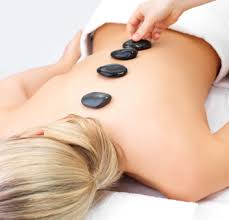
Hot Stone Massage
Best for: easing muscle tension without deep pressure; maximizing massage time
A hot stone massage might look and feel too good to be therapeutic, but these stones do in fact serve a clinical purpose.
The shape of the stones themselves enable the therapist to use special techniques that can deliver more therapeutic benefit — benefits you’ll really feel.
A therapist might use the rounded edge of a stone around the shoulder blade or in the low back or neck area to really relax the tissue between the muscles and the bone.
Then there’s the heat, of course. Beyond the “ahhh” factor of feeling those hot stones go to work on your aching back or neck, the stones transfer heat into your body. Thus allowing the therapist to work more effectively.
Still, you want the longest session you can get with a hot stone massage. The stones are pre-heated to 125 degrees at the time your session begins. You want an 80- or 110-minute hot stone massage to get the greatest benefit.
Prenatal Massage
Best for: Decreasing swelling, relieving aches and pains, easing the physical and emotional stresses of pregnancy
If you’re pregnant, it’s very important to work with a therapist who’s trained in prenatal massage. Prenatal massage training includes instruction in specific modifications used to help protect the baby, relieve symptoms like edema (swelling) and low back pain that are common during pregnancy, and make Mom more comfortable both during and after the massage.
Prenatal massage is typically done with the client lying on her side, or on her back with a wedge to support the back and knees to take pressure of the baby off the mom’s internal organs.
The therapist also needs to be trained on certain aspects of prenatal massage such as pressure points that may have the possibility of triggering contractions. Research doesn’t necessarily prove that, but you want to make sure the therapist is knowledgeable in this area.
Sports massage
Best for: Preventing and treating injury and enhancing athletic performance.
Sports massage is designed mostly for pre– or post–sports event work. For example, you might get a sports massage the day of or the day before an event such as a half-marathon to get the body really ready for the activity.
Sports massage is typically not as relaxing as other forms of massage — the generally more fast-action than Swedish massage; the techniques the therapist uses to apply pressure to the body move at a faster pace. Aided stretching is also a common sport massage technique; and it’s used to help get the lactic acid buildup in the muscles to dissipate.
But you don't have to be a professional athlete to get a sport massage. It's ideal for anyone who’s physically active — as well as someone who’s just starting out with a new workout program, running their first 10K or marathon, or doing anything else that’s outside their normal activity routine. Especially if you’re more of a novice athlete, a pre-event sports massage can make that a better event for you. And for regular marathon runners, there are specific techniques used to help a body that’s been through that kind of intense event.
Right technique, right therapist
The majority of massage therapists are trained in Swedish and deep tissue massage. Some have had advanced training in other techniques, and everyone has techniques in which they’re especially skilled or experienced. So a high-quality therapeutic massage provider will look at your health history, goals, challenges and lifestyle to match you with the therapist who’s best for your situation. You don’t want to just get put in a time slot – you need to be matched to the right therapist for you.
Your preference for light or deep pressure is another reason you want to be matched to a therapist vs. just a time-slot technique. Massage therapists’ level of pressure is not determined by the therapist’s stature, size or strength, but by how they leverage their body weight to do the deep bodywork.
Many people believe a male therapist is stronger than a female therapist and assume they’ll get a deeper massage, but that’s really not true. There are a lot of petite female therapists who know how to leverage their body weight and provide a deep tissue massage experience. So remember, gender doesn’t determine the type and depth of massage you will get.
At Elements Therapeutic Massage, our therapeutic approach is designed to match you with the therapist and the specific technique that’s best for your unique health and wellness situation. We specialize in customizing each massage session to the specific needs of every client. Therefore we often incorporate techniques from each type of massage to ensure that you receive the best and most appropriate treatment.
We also use a proprietary numbering system that indicates the level of work a therapist does. Level 1 is light pressure and Level 4 is deep pressure. Some conditions such as cancer, epilepsy, or diabetes are not appropriate for some massage techniques. Please consult your physician before beginning any massage therapy program.
Subscribe to:
Posts (Atom)